Brief History of the Chinese Alliance Church in Israel
Tel Aviv Faith, Hope & Love Chinese Alliance Church
The Chinese ministry in Israel began through a remarkable event—an elder of a Messianic Jewish congregation in Israel received 5,000 copies of the Chinese Bible from Finland. At that time, there were almost no Chinese people in Israel. However, during the mid-1990s, Jews from around the world were returning to their homeland, and Israel began recruiting foreign workers to participate in national construction projects.
Starting in 1995, Chinese laborers gradually arrived to work in Israel. The leader of that Messianic congregation realized that perhaps God was opening the door of the gospel for the Chinese people. He therefore shared this vision with Rev. David N. Lauffer, the then district director of the Israel Christian & Missionary Alliance (C&MA), who was from the United States. Rev. Lauffer then contacted Rev. Peter Chu, the executive director of the American C&MA Chinese Association, and ask him to help find Chinese pastors to come to Israel to pastor the Chinese. Among the early pioneers were the late Rev. Yonghui Zeng and other coworkers.
In 1998, the C&MA in Canada sent Rev. Jonathan Teo
and his wife, Mrs. Ruth Teo, to Israel. At that time, there were about 5,000 Chinese laborers in the country—the exact number of Chinese Bibles awaiting distribution. Small Chinese fellowships already existed in Haifa, Beersheba, and Jerusalem, and there were also Chinese translation services in Eilat. For that reason, they decided to settle in Tel Aviv.
After nine months of evangelism across the country, dozens of Bible study groups were established in cities and villages. The following year, near the Old Central Bus Station, they founded the Tel Aviv Faith, Hope & Love Chinese Alliance Church, which soon grew to about three hundred members.
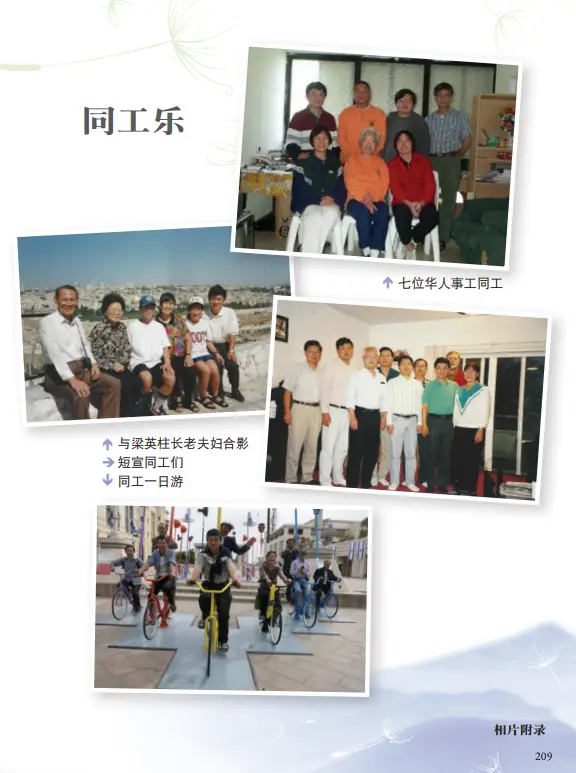
In the autumn of 2005, Elder and Mrs. Zhangjian Wang were invited to serve in Tel Aviv. Because they still led the Friday fellowship in Haifa, they often traveled between the two cities. After Elder Wang’s retirement in February 2009, he continued to return periodically to administer the sacraments and assist the church.
Beginning in 2006, Pastor Alfred Lai was responsible for the Department of Christian Education, leading Bible study classes, Sunday School, and discipleship training. From September 2012 to the end of 2013, Mrs. Lai served as chairperson of the church committee.
In 2018, Rev. Dave Wang became the senior pastor of the Tel Aviv church.
In 2024, Rev. Joshua Wen succeeded him as senior pastor.
Distinctive Features of the Chinese Alliance Church in Israel
- Background of the congregation: Most brothers work in construction, while most sisters are employed in housekeeping or service industries. Over 90% of the Faith, Hope & Love congregation are men.
- Extensive outreach ministry: Together with coworkers, the church has distributed more than 20,000 copies of Bibles, Bible study materials, sermon booklets, and multimedia resources throughout cities and towns across Israel.
- Baptisms and pilgrimages in the Holy Land: Baptisms are held in the Jordan River during summer and in the Jerusalem Missionary Chapel during winter. On baptism days, new believers and seekers often visit biblical sites together and share the gospel. At its peak, ten buses carrying over five hundred participants joined these trips, leaving touching testimonies at Masada and the Dead Sea.
- Chinese New Year gatherings: Since 1999, the annual Spring Festival gatherings have grown in attendance year by year. In 2002, the number reached 2,200 people, with another thousand unable to enter due to space limitations. In 2003, attendance exceeded 3,000. Laborers, scholars, and short-term mission teams celebrated the New Year through songs, drama, and messages, and about six hundred people came to faith during these two gatherings. Messianic Jewish speakers called it “the largest evangelistic event in Israel since Pentecost.”
Today, many Chinese churches speak of cross-cultural missions and “the gospel that goes forth from Jerusalem,” yet few realize that God had already established Chinese congregations in several cities of Israel.
If the era of Chinese laborers in Israel has reached its completion, then perhaps the mission of the Tel Aviv church has also been fulfilled. But if the Lord wills, new laborers, scholars, or believers may yet come.
What lies ahead only the Father knows. Yet one thing is certain: over the past two decades, Chinese people from many nations have sown seeds of faith across Israel’s workplaces and universities.
We firmly believe that—should the Lord’s purpose continue—the worship and praise of Chinese Christians in the Holy Land will keep resounding.
Welcome to the Chinese Church in Israel!

